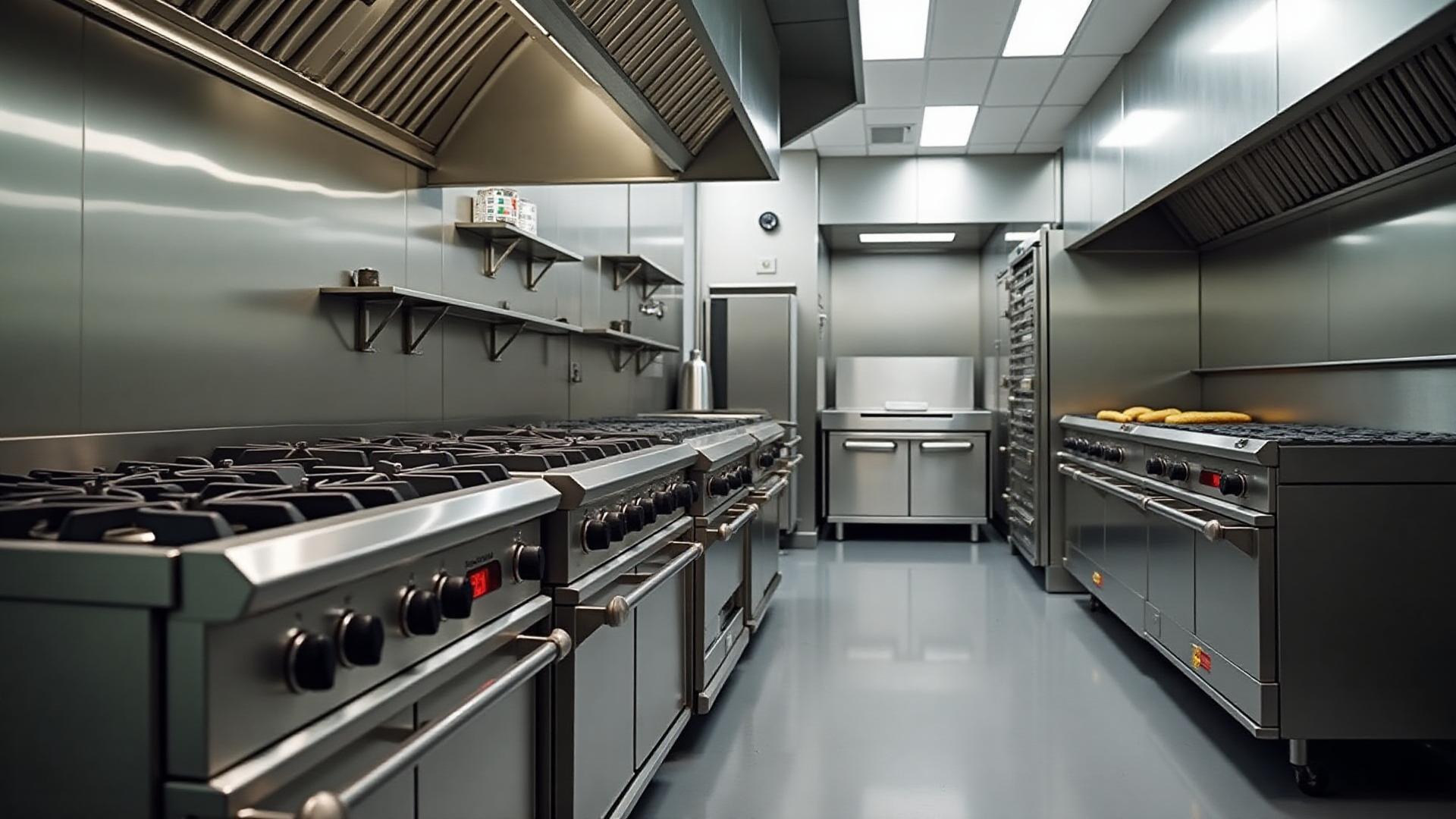
Regulations, guidance and records are different
The Gas Safety (Installation and Use) Regulations 1998 set duties for gas safety where they apply. Wider workplace health and safety duties also matter. HSE guidance explains practical precautions for catering and hospitality, while a British Standard provides technical recommendations. A CP42 form is a record of inspection findings. Treating these four things as interchangeable can lead to misleading claims that possession of one certificate automatically makes a kitchen compliant.
Requirements depend on who controls the equipment, the premises, the work and the gas type. Employers, building managers, landlords, designers and contractors can have different responsibilities. Agree who is responsible for maintenance, inspection, ventilation and remedial work. This page provides general information, not site-specific legal advice or a determination that a particular kitchen meets every applicable duty.
Does every kitchen legally need an annual CP42?
Do not confuse a commonly requested annual catering gas safety record with a universal statutory annual CP42 rule. HSE advises maintaining gas equipment in a safe condition and following manufacturer recommendations; its catering guidance describes annual inspection as a reasonable general minimum, with circumstances potentially requiring more frequent attention. Specific landlord duties and contractual requirements must be considered separately.
An insurer, landlord, event organiser or local authority may require a current gas safety record. Ask what documentation and scope they require, and retain maintenance records as well. Passing an inspection does not remove the need to respond to later faults. Similarly, servicing one appliance does not demonstrate that the whole installation, pipework and ventilation have been inspected.
Gas Safe registration and relevant competence
Where the gas regulations require registration, the contractor must be Gas Safe registered and the person doing the work must be competent for the relevant activity. Check the engineer identity card, its validity and the appropriate categories. Commercial catering and LPG work require the relevant competence; a domestic boiler qualification or a company logo is not enough to establish suitability for a mobile catering installation or a commercial fryer.
Manufacturer training or authorised-agent status is a separate matter from gas registration. Do not infer either from a brand name on a website. Ask the contractor to confirm competence and scope for your exact appliance, particularly for gas combi ovens that also involve water systems and complex electrical controls. This site leaves its registration number unpublished until the owner confirms it.
Ventilation, interlocks and BS 6173
BS 6173 concerns gas-fired catering appliances in commercial establishments. Use the current applicable standard and the appliance instructions when assessing an installation. HSE CAIS23 and CAIS10 explain why suitable ventilation is important and how gas controls should interact with mechanical extraction. A fan being electrically energised is not always equivalent to effective extraction at the canopy.
Never bypass an interlock because cooking equipment stops when extraction fails. Existing arrangements may need a competent assessment and risk controls rather than a simplistic declaration based only on installation age. Changes to the canopy, fan, ductwork or cookline can alter the safety arrangement. Coordinate gas and ventilation work so that each contractor understands the interface and the completed operation is checked.
Mobile catering and LPG
Mobile catering introduces cylinder storage, regulators, hoses, securing arrangements and unit ventilation alongside appliance safety. Natural gas equipment is not automatically suitable for LPG, and a conversion requires manufacturer support for the exact model. Fixed commercial kitchen competence should not be assumed to cover every LPG mobile catering activity.
Event organisers and pitch providers commonly ask for gas safety documentation before trading. Confirm their requirements early and retain inspection and maintenance records. A certificate is not permission to change cylinders, hoses or the layout without following the relevant instructions and competent advice. If a gas concern arises, stop using the equipment and follow the LPG supplier emergency guidance.
A practical recordkeeping checklist
Maintain an appliance register with models, serial numbers and fuel types; manufacturer manuals; service and inspection reports; details of alterations; and a record of defects and the action taken. Ensure that kitchen staff know where gas can be isolated and how to report abnormal flames, ignition failures, suspected gas or an interlock fault. Operator cleaning must remain within the manual and must not become unsupervised gas maintenance.
Plan inspections and maintenance around manufacturer guidance, usage and the risks at the site. Use written findings to prioritise remedial work, not merely to file a certificate. When commissioning or repairing equipment, ask what checks were completed and whether any restrictions remain. Keep a clear responsibility trail where the landlord, operator and facilities provider share control of the kitchen.
Applying the guidance to a Nottingham kitchen
Start by listing the gas appliances and identifying who is responsible for each part of the installation. Provide the latest records and describe any changes in the cookline, gas supply or extraction. The resulting enquiry may concern a safety inspection, servicing, installation work or a ventilation assessment; it should not be forced into one generic certificate visit if the actual issue needs a different scope.
Request a written quote with attendance confirmed for your Nottingham site. This site does not publish prices or guaranteed response times. For a suspected mains gas emergency, call the National Gas Emergency Service on 0800 111 999 from a safe location and follow its advice rather than waiting for a booking response. No general information page can establish that unsafe equipment may be used.